About me
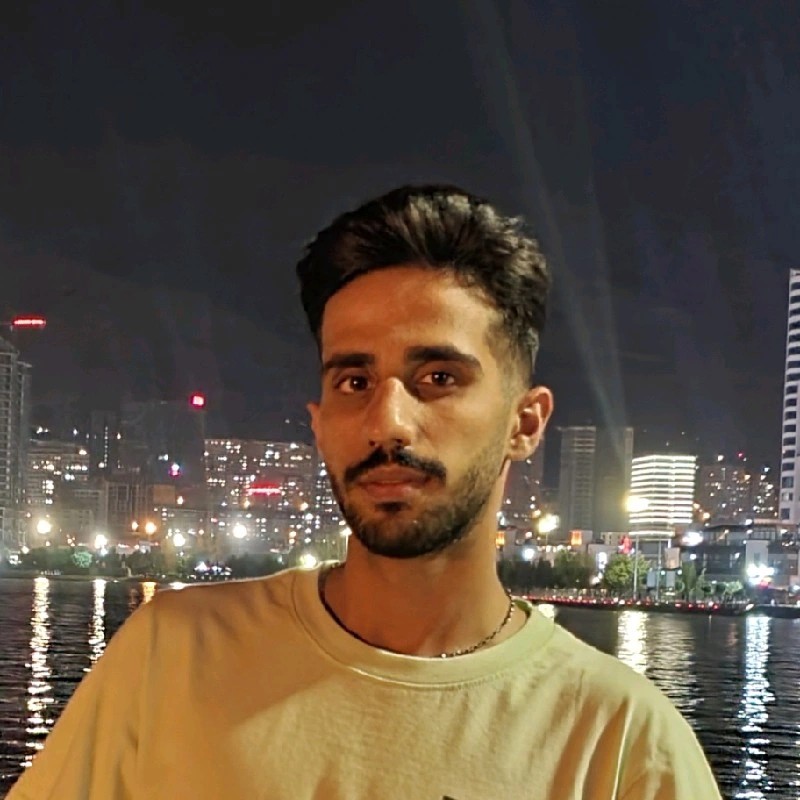
I am Erfan Panahi, a senior BSc Electrical Engineering student at the University of Tehran. My journey into electrical engineering began in my childhood, accompanying my father, a refrigerator repairman. At the age of 8, I was captivated by the intricacies of the electrical board within a refrigerator, sparking a lasting curiosity. Throughout high school, my active involvement with my father, coupled with a keen interest in electrical circuits, mathematics, and proofs, prompted me to pursue a mathematical-physics track. This passion led me to select electrical engineering for my undergraduate studies at the University of Tehran, Iran’s premier institution.
Research Interests
During my undergraduate years, I engaged in a spectrum of advanced mathematics and telecommunications-related courses. In foundational semesters, I delved into courses such as Calculus, Differential Equations, Engineering Mathematics, Probability and Statistics, and Linear Algebra. As my academic journey progressed, specialized courses like Signals and Systems and Principles of Communication Systems deepened my interest in telecommunications. Recognizing the significance of mastering foundational concepts, I focused on comprehending the fundamental principles presented in these courses. Upon completing Signals and Systems and Principles of Communication Systems, I gained insights into analog modulations in communication systems, understanding their impact on signal transmission and reception channels. Subsequently, I delved into digital communications, taking courses in Digital Signal Processing and Digital Communication. These courses honed my skills in digital transmitters, receivers, and various modulation techniques, supplemented by practical implementations using MATLAB.
My curiosity expanded to artificial intelligence, prompting enrollment in the Intelligent Systems course. Here, I explored algorithms such as optimization, genetic algorithms, and supervised machine learning methods. The journey extended to unsupervised machine learning, deep learning, neural networks, Naive Bayes, and their applications in natural language processing. Further exploration included reinforcement learning algorithms like Q-learning and Deep Q-learning, culminating in projects executed in Python. Concluding my undergraduate studies, the Wireless Communications course provided an exhaustive overview of wireless communication concepts. Topics covered included shadowing effects, path loss, multi-path channels, diversity techniques, coding, OFDM systems, MIMO systems, and Massive MIMO. Successful completion of two projects solidified my understanding of these concepts.
Experiences
Teaching Assistant: Simultaneously, starting from my second year, my academic performance and passion for specific courses led me to actively serve as a teaching assistant. Designing exercises, quizzes, and conducting tutorial sessions for various courses, I progressively assumed a senior teaching assistant role for four courses. These responsibilities went beyond typical duties, involving oversight of a group of teaching assistants.
In the last term, I serve as a teaching assistant for Principles of Communication Systems and Intelligent Systems. This multifaceted academic journey, coupled with my teaching experiences, has equipped me with a strong foundation for entering a Ph.D. program. My diverse background and distinct experiences set my application apart, showcasing my commitment to academic and professional development.
Research Assistant: My experiences in telecommunications and signal processing, rooted in my electrical engineering background, have been particularly rewarding due to their tangible, real-world applications. The appeal lies in translating complex equations into solutions that closely mirror reality.
My journey began with mastering programming basics, progressing to advanced languages, a skillset crucial for advanced telecommunications courses. Following signal processing classes, I connected with Dr. Saeed Akhavan, an expert in the field, leading to a summer internship focused on processing electrocardiogram (ECG) and photoplethysmogram (PPG) signals. During this internship, I researched ECG and PPG signals, designed a signal acquisition device, processed signals to display various waves on the ECG, and extracted heartbeats. Seeking additional challenges, I collaborated on a paper related to blood pressure estimation using PPG signals and force sensors. Later, I joined the “Hekimed” group, contributing to the design of a device measuring various parameters and displaying data through a mobile or computer app. This multidisciplinary project involved software and graphic design, electronics for board design and signal reception, signal processing, and industrial design. With a clear understanding of the project’s goals, I actively contributed to tasks, recognizing the need for deeper knowledge in artificial intelligence. I enrolled in courses on Intelligent Systems and neural networks, leading to the design of a neural network for identifying various heart arrhythmias using ECG signals. This collaborative project enhanced my coordination skills across software and graphic design, instilling confidence in my ability to self-educate when faced with information gaps. In the summer of 2023, I successfully presented my bachelor’s thesis, covering activities from circuit board implementation to signal processing and arrhythmia detection using artificial intelligence.